

Our approach to
Learning
Developing creativity in children supports innovative thinking and problem-solving skills that extend into adulthood.
The arts engage all senses, encouraging children to observe, interpret, and respond to the world in deeper and more meaningful ways. Through artistic exploration, children are able to take in information, analyse it, and synthesise ideas with greater complexity.
The arts also foster openness to diverse perspectives. All learning attempts are valued and celebrated, as creative experiences emphasise that there is often no single “right” or “wrong” outcome.
Through artistic expression, children engage with a wide range of cultures in meaningful and accessible ways, building appreciation, empathy, and connection. The arts also promote social interaction and collaboration, strengthening a sense of community.
Importantly, every child is naturally drawn to at least one art form, providing an intrinsic source of motivation that supports engagement and lifelong learning.
Explore

Why use the arts?
The use of the arts in supporting early brain development is strongly supported by neuroscience research.
“In the brain’s early years, neural connections are being formed at a rapid rate. Much of what young children do in play—singing, drawing, dancing—are natural forms of art. These activities engage all the senses and help wire the brain for successful learning.” — Sousa, D.
Through engaging with young children in the arts, we support them to express their understanding through multiple ‘languages’, using individualised and unique forms of expression. This approach reflects a view of children as capable learners with the ability to actively construct their own knowledge.
“…seeing children in their brilliance and competence in constructing and advancing their own understanding.” — Edwards, Gandini & Forman (2011), The Hundred Languages of Children: The Reggio Emilia Experience in Transformation
At Corrimal Early Learning, music, dance, drama, and visual arts are embedded in daily practice rather than offered as occasional experiences. Our intentional approach ensures the arts are woven throughout learning, recognising that every child is motivated by at least one artistic form and learns best through meaningful, creative engagement.
Calm consistent environments promote children’s independence
Fundamental in supporting children’s independence and overall development are calm and predictable environments.
We implement learning environments that foster a strong sense of belonging and security. This is achieved through consistent routines and intentional daily rhythms that help children feel safe, confident, and able to engage fully in their learning.
Over time, children develop increasing independence in self-care and daily routines, building competence and a strong sense of self-satisfaction as they master new skills. This growth is further supported by consistent, responsive educators who provide praise and validation, continuity and trusting relationships.
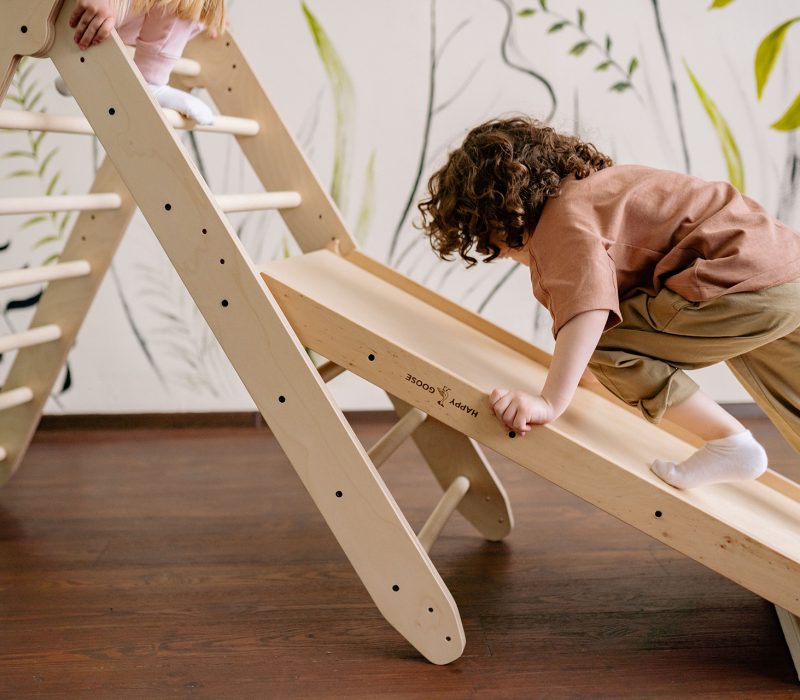
Children’s agency is actively promoted as they are encouraged to make choices about learning materials and experiences, participate in age-appropriate decision-making, and take on meaningful responsibilities within their environment.
Montessori philosophy underpins this approach, with a strong emphasis on the development of the whole child. Our learning environments are designed to support success through independence, fostering confidence, capability, and intrinsic motivation as children experience achievement in their everyday learning.
Learning experiences are designed to include both completed tasks and open-ended opportunities, enabling children to persist, extend their ideas, and engage deeply in purposeful exploration.
Curriculum
We implement the Australian Early Years Learning Framework. Through careful observation of children’s interests and curiosities during play, educators design intentional learning experiences aligned with approved curriculum outcomes, while also recognising, responding to, and valuing spontaneous learning opportunities as they arise.
Strong connections with home are maintained, with families encouraged to share children’s emerging interests, home experiences, and upcoming cultural and family events, ensuring continuity between home and the learning environment.
Educators are further supported by curriculum resources developed by PEC Early Learning, including scope and sequence materials in the Arts, early communication and literacy, mathematics, and independence. Our planning is also informed by Montessori curriculum principles, supporting a holistic and child-centred approach to learning.
Philosophical underpinnings Influence the Learning Environment
Our approach to learning is informed by a range of respected educational philosophies, including those of Maria Montessori (emphasises independence, hands-on learning, and respect for a child’s natural development), Jean Piaget (cognitive development), Erik Erikson (psychosocial development), and Lev Vygotsky (Zone of Proximal Development).
In practice, this integrated approach ensures our learning environments are intentionally designed to promote independence, exploration, creativity, and problem-solving. Educators skilfully scaffold children’s learning, thoughtfully connecting experiences to children’s interests and curriculum outcomes while extending individual development.
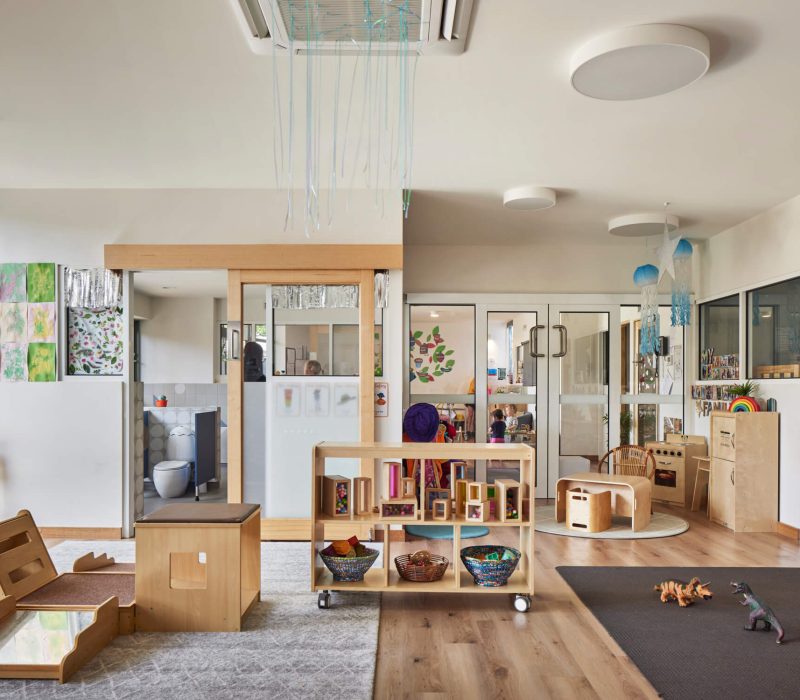
Our learning environment is organised, predictable, and thoughtfully structured to support children’s confidence, security, and engagement in learning.
Grounded in deep respect for each other and the learning environment, our program offers a balanced blend of educator-led intentional teaching and child-initiated spontaneous play. This is supported by carefully selected and thoughtfully arranged resources and learning materials, enabling children to engage deeply, confidently, and meaningfully in their learning experiences.
Screen time in early education
Screen use is kept to a minimum and is only introduced where it directly supports the demonstration of an educational concept that cannot be easily explored through other hands-on or interactive experiences. Within the childcare setting, screen-based experiences are not a primary focus.
The early years (0–5) represent a critical window of opportunity for social development, during which children rapidly build foundational skills in communication, relationships, empathy, and cooperative play. Prioritising rich, face-to-face interactions during this period supports these emerging capabilities and strengthens children’s confidence and ability to engage effectively with others.
This intentional approach also fosters the development of creative thinking, problem-solving skills, and sustained concentration. It encourages children to respond to and connect with others, further enhancing communication and social interaction.
This approach aligns with Australian screen time guidelines, which recommend no screen time for children under two years of age and limited, purposeful use for children aged two to five years.